
Digital Commons at Work: Policies for Open-Source AI Clubs in Factories & Offices
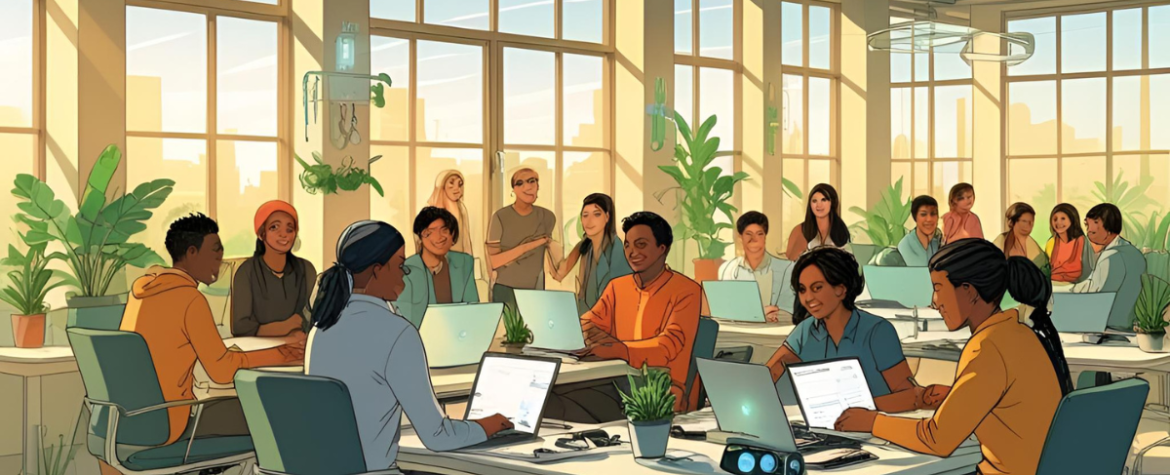
At the edge of a sprawling industrial park in Ohio, a small robotics maintenance crew logs into a shared platform. It looks like GitHub, but it’s built for their floor-level problems: predictive maintenance scripts, troubleshooting logs, and DIY safety alerts—all tagged, versioned, and open to coworkers from other plants across the state.
One technician uploads a tweak to an AI-based vibration sensor script. Another flags a bug and shares a patch written on their lunch break. No managers mandate this. No software vendor oversees it. This is a grassroots AI Club: a digital commons curated by workers who live the machines, know their quirks, and now, write their code.
From Factory Floors to Code Repositories
As AI sweeps through manufacturing, logistics, and administrative work, most innovations arrive top-down—packaged by vendors, installed by consultants, and managed by distant IT teams. But the real magic? It often starts bottom-up.
Blue-collar teams, office workers, and frontline operators are already hacking together solutions: Excel macros, low-code automations, GPT-generated summaries. Yet without structure, these efforts stay siloed, uncredited, and at risk of vanishing when someone quits.
Now imagine a national policy framework that doesn’t just permit—but funds, protects, and scales this spirit of collaboration.
The Policy Case for Open-Source AI Clubs
Open-source has long driven innovation in software. What if that same ethos shaped the way workplaces adapt to AI?
AI Clubs—think digital co-ops within workplaces—offer employees a platform to co-develop, test, and refine AI tools that improve efficiency, safety, and equity. When nurtured as digital commons, these clubs:
- Democratize access to innovation tools
- Promote AI literacy across job roles
- Retain institutional knowledge
- Foster a culture of bottom-up creativity
And here’s the clincher: They ensure that AI serves those closest to the problems—not just those closest to the C-suite.
Why This Matters Now
Many of today’s AI deployments fail not because of tech flaws—but because workers aren’t involved in their design. A 2023 MIT Sloan study found that employee resistance, unclear value, and poor integration sunk over 40% of AI pilot programs.
By contrast, peer-driven AI solutions often stick. They align with real workflows, carry team buy-in, and evolve with hands-on feedback.
But such efforts need protection. In many firms, a worker sharing an AI script might risk IP disputes, reprimands, or getting overlooked in annual reviews.
Policy can flip that script.
A Policy Blueprint for Workplace AI Commons
To seed and sustain AI Clubs, national and state governments can adopt a few core principles:
1. Tax Incentives for Collaborative Innovation
Offer tax breaks or innovation credits to firms that establish worker-led AI Clubs, with transparent documentation and peer review processes.
2. Collective IP Sharing Models
Develop licensing frameworks (akin to Creative Commons) for AI scripts created inside companies—balancing worker attribution, firm security, and ecosystem openness.
3. Government-Sponsored Hackathons
Fund regular workplace-focused hackathons, where AI Club members co-develop solutions alongside mentors and cross-functional peers. Prize money, sabbatical time, or publication opportunities sweeten the pot.
4. AI Commons Grant Programs
Support nonprofit consortia or labor unions to build and maintain open repositories of blue-collar AI tools. Think GitHub for factories, funded like a public utility.
5. Digital Literacy & Ethics Training
Require participating workplaces to offer training on responsible AI use, data privacy, and bias mitigation—ensuring these tools reflect shared values, not just code speed.
Workplace Innovation as Infrastructure
The genius of open-source isn’t just the code—it’s the culture. Shared norms. Peer feedback. Continuous improvement.
A factory worker’s tweak to a conveyor belt sensor script might save thousands in downtime. An office clerk’s prompt template might improve accessibility for a neurodiverse coworker. These micro-innovations matter.
When nurtured through policy, AI Clubs can become permanent features of the workplace—like HR or IT. Not fads, but functions.
The Democratic Dividend
Most workers don’t oppose AI. They oppose being sidelined.
Digital commons flip the dynamic. They say: you don’t need a PhD to co-create with AI. You need time, trust, and tools.
By giving workers a stake in the AI layer of their jobs, we also give them a voice in the future of work. It’s not just more equitable. It’s more effective.
What’s Next
Imagine every factory, hospital, school, or office having an AI Club: a space where workers test, share, and shape the tools that shape them. Supported by public grants. Guided by ethical frameworks. Fueled by pride.
Innovation doesn’t have to come from Silicon Valley. Sometimes, it emerges from a break room, a shop floor, or a shared folder of scripts labeled “cool stuff.”
Let’s build policy that recognizes that. Let’s put digital commons at the heart of the AI workplace revolution.
Choose Layout
Main Color Scheme
- RTL Version
- LTR Version